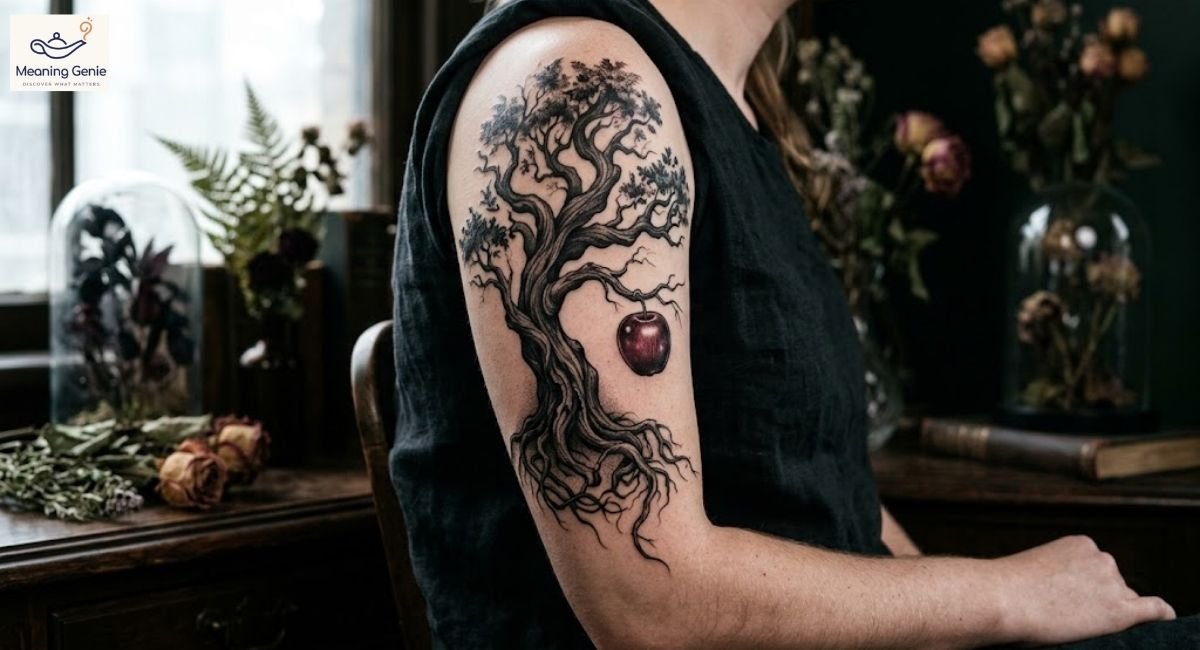
You came across a poison tree tattoo and found yourself wondering what the dark imagery really represents. The twisted branches, deep roots, or striking fruit may look beautiful, but there is often a much deeper story underneath. If you are unsure whether the design represents anger, revenge, pain, or something more positive, you are not alone.
The poison tree tattoo meaning is closely connected to emotion, literature, and William Blake’s famous poem A Poison Tree. Yet its symbolism does not end there. Depending on the design and the wearer’s story, it can represent hidden resentment, emotional struggle, consequences, healing, or personal growth. Let’s explore where this unusual symbol comes from and what it can mean today.
What Does a Poison Tree Tattoo Mean?
So, what does a poison tree tattoo mean? Most commonly, it represents hidden resentment, unexpressed emotions, and the harm that difficult feelings can cause when they remain buried. The growing tree becomes a metaphor for anger that receives attention instead of resolution.
However, the meaning of poison tree tattoo is not fixed. One person may connect it with emotional pain, while another sees it as a lesson about communication. This poison tree tattoo symbolism can also represent awareness, survival, and the decision to move beyond bitterness.
Where Does the Poison Tree Symbol Come From?
The strongest source of modern poison tree symbolism is A Poison Tree by William Blake, published in Songs of Experience in 1794. The poem contrasts anger that is openly addressed with anger that remains hidden and gradually grows.
Over time, this memorable image became part of literary tattoo symbolism. Modern artists and tattoo wearers expanded its meaning beyond the poem. Today, a poison tree tattoo may combine Blake’s ideas with personal experiences, dark nature imagery, or an entirely individual story.
William Blake’s “A Poison Tree”: The Meaning Behind the Symbol
The William Blake poison tree provides the clearest foundation for the tattoo’s deeper message. Blake presents two different paths. Anger shared openly with a friend fades, while anger hidden from an enemy continues to grow and becomes destructive.
The central idea can be understood simply: anger → silence → resentment → growth → poisoned fruit → consequences. This chain explains much of the A Poison Tree poem meaning. Understanding William Blake symbolism also helps you separate the poem’s original message from modern tattoo interpretations.

Anger That Is Expressed
Blake first shows anger being communicated openly. Once the speaker addresses the problem with a friend, the anger disappears. For tattoo symbolism, this can represent honest communication and self-awareness, showing that difficult emotions do not always need to become destructive.
Anger That Is Hidden
The second situation becomes darker because the speaker hides anger from an enemy. Hidden emotions continue beneath the surface, while silence allows bitterness to grow. The poem suggests that unresolved feelings can become more powerful when someone repeatedly feeds them with secrecy.
The Tree and Its Poisoned Fruit
Eventually, anger becomes a symbolic tree that produces an apple. The poisonous apple represents the dangerous result of resentment that has been carefully nurtured. Something can appear beautiful while hiding harmful consequences, much like a tempting forbidden fruit.
Biblical and Historical Symbolism of the Poison Tree
Some modern interpretations connect poisonous fruit imagery with the Tree of Knowledge and the Garden of Eden. These comparisons usually focus on temptation, knowledge, choice, and consequences. However, the poison tree tattoo itself does not have one proven biblical origin.
Broader biblical symbolism can add context, but Blake’s poem remains the strongest direct influence on this particular image. Across many traditions, trees have represented life, wisdom, danger, and change. Your interpretation may therefore combine literary ideas with personal beliefs.
What Does a Poison Tree Tattoo Symbolize Emotionally?
Emotionally, the design can represent betrayal, grief, inner conflict, and feelings that someone struggled to express. Think of resentment like a root beneath the soil. Nobody notices it immediately, yet it can spread when pain receives no healthy outlet. If you are interested in tattoos that express difficult experiences while carrying a message of hope, you can also explore our guide to [semicolon tattoo meaning and symbolism].
Interestingly, the same image can represent emotional healing. Some people choose it after recognizing harmful emotional patterns. In that context, the tattoo becomes less about celebrating darkness and more about self-awareness, personal growth, and emotional transformation.
Poison Tree Tattoo Design Elements and Their Meanings
A poison tree tattoo design can tell different stories through small visual details. The tree provides the main image, while roots, fruit, thorns, flowers, and animals add extra meaning.

Each element works like another sentence in a visual story.
| Design Element | Common Interpretation | Possible Personal Meaning |
| Poisoned apple | Temptation and consequences | A painful lesson |
| Deep roots | Long-held emotions | A difficult past |
| Twisted branches | Inner conflict | Personal complexity |
| Dead branches | Loss or exhaustion | The end of a chapter |
| Thorns | Pain and protection | Emotional boundaries |
| New leaves | Renewal | Personal growth |
| Snake | Temptation or betrayal | A personal warning |
| Cracked trunk | Damage and resilience | Surviving hardship |
Does a Poison Tree Tattoo Always Mean Revenge?
No. Although revenge connects with the darker ending of Blake’s poem, it is only one possible interpretation. Modern tattoos often develop meanings based on the experiences and intentions of the person wearing them.
For example, someone may choose this meaningful tattoo as a warning against holding grudges. Another person may connect it with a difficult relationship or emotional recovery. The poison tree tattoo interpretation can focus on awareness and change rather than revenge itself.
Who Gets Poison Tree Tattoos and Why?
People choose this design for many different reasons. Some admire William Blake and want a subtle William Blake tattoo connected to his poetry. Others connect with the idea that emotions need attention before they grow into something harmful.
A design with a personal tattoo meaning may represent survival after difficult experiences. Someone else may simply love dark botanical artwork. This flexibility gives the poison tree tattoo significance emotional depth without forcing one explanation onto every wearer.
Poison Tree Tattoo Placement and Meaning
Placement can change how you experience a tattoo. A visible design may become a daily reminder, while a hidden placement can protect a private story. However, no official rules say that one body area always carries one fixed meaning.
Practical details matter as well. Large trees need enough space for branches and roots, while smaller areas may suit a single apple or minimalist silhouette. Your comfort, lifestyle, and preferred tattoo design symbolism should guide the decision.
Forearm and Wrist
The forearm and wrist keep the tattoo easy to see. Some people choose these areas when they want a regular reminder of self-awareness or emotional growth. Smaller trees, visible roots, or a single piece of symbolic fruit can work particularly well.
Chest and Ribs
The chest and ribs can feel more private because clothing usually covers them. A tree can also follow the natural shape of the body. Some people connect these areas with emotional pain, although the final meaning always remains personal.
Back, Leg, and Calf
The back, leg, and calf offer more space for detailed artwork. Large branches and deep roots can develop without feeling cramped. These placements work especially well when your poison tree tattoo design includes several connected visual elements.
Poison Tree Tattoo vs. Other Dark Tree Tattoos
The dark tree tattoo meaning can change significantly depending on the design. A poison tree usually focuses on emotional consequences and dangerous growth, while other trees may represent family, loss, memory, or resilience.

The smallest visual details can shift the message, making each tree design tell a distinctly different story.
| Tattoo Type | Common Symbolism | Key Difference |
| Poison Tree | Hidden anger and consequences | Often includes symbolic fruit |
| Dead Tree | Loss and endings | Usually bare and fruitless |
| Tree of Life | Connection and growth | Often balanced and flourishing |
| Weeping Willow | Grief and remembrance | Features drooping branches |
| Twisted Tree | Struggle and resilience | Focuses on unusual shapes |
| Tree With a Serpent | Temptation and knowledge | Includes a visible snake |
Can a Poison Tree Tattoo Have a Positive Meaning?
Absolutely. A dark symbol can still carry a hopeful message. Many people choose an A Poison Tree tattoo not because they celebrate resentment, but because they understand what can happen when difficult emotions remain ignored.

In this context, the tattoo becomes a warning rather than a celebration of darkness. It can represent emotional healing, honest communication, and personal growth. Sometimes the strongest symbols remind you not only where you have been but also where you refuse to return.
Common Misunderstandings About Poison Tree Tattoos
One common mistake is treating tattoo symbolism like a dictionary with one correct answer. Art rarely works that way. Blake’s poem provides important context, yet your experiences and design choices can reshape the message.
Understanding this difference can make your meaningful tattoo symbolism more intentional. Before choosing a design, separate ideas that come directly from the poem from those created through modern art, personal experience, or broader tree tattoo symbolism.
It Always Means Revenge
No, it does not. Revenge is one interpretation because of the poem’s ending, yet many people focus on its warning instead. The tattoo may represent learning not to allow anger and resentment to control future choices.
Every Poison Tree Design Has the Same Meaning
Different details can completely change the message. A tree with a poisonous apple may emphasize consequences, while flowers may suggest recovery. Deep roots can represent history, making each design more personal and distinctive.
It Has Only a Negative Symbolism
Dark imagery does not automatically create a negative message. A tattoo can acknowledge pain while representing survival and change. This balance makes dark tattoo symbolism powerful because it recognizes that growth can begin in difficult places.
Things to Consider Before Getting a Poison Tree Tattoo
Before visiting a tattoo artist, spend time understanding the symbol. Reading A Poison Tree can help you explore its literary background. Then ask yourself which part of the image genuinely connects with your own story.
Also consider the artist’s style, placement, size, and future visibility. Detailed branches require skill, particularly when a design uses fine lines. Instead of copying another tattoo exactly, create something that reflects your own personal tattoo meaning.
Poison Tree Tattoo Meaning: Quick Summary
The poison tree tattoo meaning brings together literature, emotion, and visual art. Its strongest connection comes from Blake’s poem, where hidden anger gradually grows into a destructive symbol. The design can represent resentment, consequences, and difficult feelings left unresolved.
Modern interpretations add another layer. The image may also symbolize suppressed anger, awareness, survival, and emotional transformation. In simple terms, it can represent both the danger of feeding negativity and the wisdom of recognizing it before it grows.
Frequently Asked Questions
What does the poison tree symbolize?
A poison tree commonly symbolizes hidden anger, resentment, and unexpressed emotions that grow when they remain unresolved. It can also represent consequences and emotional transformation.
What is the meaning behind the poison tree?
The poison tree represents how suppressed feelings can grow into something destructive. Its strongest literary meaning comes from William Blake’s poem A Poison Tree.
Which tattoo to avoid?
Avoid a tattoo you do not fully understand or one chosen only because it looks trendy. For a meaningful design, make sure its symbolism genuinely connects with your story.
What does a poison tattoo mean?
A poison-themed tattoo can symbolize danger, betrayal, temptation, emotional pain, or hidden toxicity. Its exact meaning depends on the imagery and the wearer’s personal interpretation.
What is the difference between a poison tree and a dead tree tattoo?
A poison tree usually represents hidden emotions, resentment, and consequences, often inspired by Blake’s poem. A dead tree more commonly symbolizes loss, endings, grief, or mortality.
Final Thoughts
The poison tree tattoo meaning remains powerful because it combines a memorable literary image with deeply human emotions. Its roots lead strongly toward William Blake, yet modern interpretations continue to grow through art and individual experience.
Ultimately, your tattoo should reflect a story that matters to you. It may represent anger, hidden resentment, healing, or change. Like a real tree, its meaning can grow in different directions, shaped by the experiences that gave it life.

Words can be confusing—but understanding them shouldn’t be. I’m Muhammad Umair, an AI-powered SEO & content writer at Meaning Genie, helping readers decode slang, abbreviations, and internet language with simple, clear explanations.
3 thoughts on “Poison Tree Tattoo Meaning: Symbolism, Origins, and What It Represents”